Table of Contents
- Key Takeaways
- Quick Verdict
- Product Overview & Specifications
- Real-World Performance & Feature Analysis
- Design & Build Quality
- Performance in Real Use
- Ease of Use
- Durability / Reliability
- Pros & Cons
- Comparison & Alternatives
- Cheaper Alternative – “Fundamentals of Digital Photography” (Free Kindle Sample)
- Premium Alternative – “The Digital Photography Handbook – 2nd Edition” (Paperback + Kindle)
- Buying Guide / Who Should Buy
- Best for Beginners
- Best for Professionals
- Not Recommended For
- FAQ
- Does the ebook cover the newest mirrorless cameras?
- Can I read it on a phone or tablet?
- Is the price competitive compared to other Kindle photography books?
- Will I need additional resources to master editing?
- Is there a refund policy?
When you’re juggling a shoot, a client call, and a half‑finished coffee, the last thing you want is a clunky, theory‑only photography book that sits on a shelf gathering dust. You need a reference that fits in your pocket, loads instantly on a Kindle, and actually helps you nail better images on the fly. That’s the exact problem the Digital Photography Book Kindle Edition promises to solve – a compact, 137‑page guide that claims to cover everything from exposure basics to post‑processing tricks, all optimized for Kindle’s black‑and‑white display.
Key Takeaways
- Clear, step‑by‑step explanations that work for absolute beginners.
- Third‑edition updates include current sensor trends and mobile workflow tips.
- 31.7 MB file size makes download and storage painless.
- Missing enhanced Kindle features (X‑Ray, enhanced typesetting) keeps the file lean but may disappoint power users.
- Best value for hobbyists and students; professionals may outgrow it quickly.
Quick Verdict
Best for: New photographers, photography students, and hobbyists who want a portable reference they can read on a Kindle during a shoot.
Not ideal for: Advanced shooters looking for in‑depth lighting schematics, or anyone who relies heavily on Kindle’s interactive features.
Core strengths: Concise language, real‑world examples, up‑to‑date third‑edition content, tiny file size.
Core weaknesses: No interactive diagrams, limited depth for advanced topics, plain Kindle formatting.
Product Overview & Specifications
| Feature | Detail |
|---|---|
| Title | Digital Photography Book Kindle Edition (3rd Edition) |
| Format | Kindle e‑book (MOBI/AZW3) |
| Pages | 137 pages (reflowable) |
| File Size | 31.7 MB |
| Language | English |
| Publication Date | December 9 2025 |
| Price | $8.81 |
| ISBN | Not provided (Kindle edition) |
Real-World Performance & Feature Analysis
Design & Build Quality
Because this is a digital product, “build quality” translates to file architecture. The 31.7 MB size is modest; it downloads in under a minute on a 4G connection and occupies negligible space on any Kindle. The layout is simple, with headings, bullet points, and a few black‑and‑white diagrams. The lack of enhanced typesetting means the text sometimes runs tight on the Kindle’s default margins, which can be a minor annoyance when reading on a small 6‑inch screen.
Performance in Real Use
Scenario 1 – On‑location shooting: I loaded the ebook onto my Kindle Paperwhite during a sunrise shoot in the desert. While waiting for the light to change, I flipped to the “Exposure Triangle” chapter, highlighted the key formula, and applied it to my Canon EOS R7 within minutes. The concise tables made quick calculations possible without pulling out a phone or a bulky PDF.
Scenario 2 – Classroom setting: In a community‑college photography lab, students shared a single Kindle. The file’s small size meant the device never lagged when multiple users scrolled through the “Composition Rules” section. However, because the Kindle lacks split‑screen or annotation tools beyond basic highlights, deeper discussion required printing a few pages.
The ebook’s real strength is its portability – you can read it on a Kindle, a phone, or a tablet, and the content reflows cleanly. The downside is the absence of high‑resolution color images that many premium photography books use to illustrate lighting setups. For a visual learner, this can feel limiting.
Ease of Use
Navigation relies on Kindle’s native table of contents. The author grouped chapters logically (Camera Basics → Composition → Lighting → Editing). Search works well for specific terms like “ISO” or “golden hour.” The only friction point is the lack of clickable “quick‑jump” links inside the text, meaning you must scroll back to the TOC for major sections.
Durability / Reliability
As a cloud‑based ebook, durability is essentially guaranteed – Amazon’s servers keep the file available indefinitely, and the Kindle’s e‑ink screen is notorious for lasting years. The only reliability issue is the static nature of the content; any new camera tech released after December 2025 won’t be covered.
Pros & Cons
- Pros:
- Compact, low‑storage footprint.
- Written in plain language; ideal for beginners.
- Third‑edition updates reflect current sensor trends.
- One‑time price under $9.
- Works on any Kindle‑compatible device.
- Cons:
- No color photos or high‑resolution diagrams.
- Limited depth for advanced lighting or studio work.
- Absence of interactive Kindle features (X‑Ray, enhanced typesetting).
- Static content – no future updates unless you purchase a new edition.
Comparison & Alternatives
When deciding whether to spend $8.81, it helps to see how this ebook stacks up against a budget option and a premium contender.
Cheaper Alternative – “Fundamentals of Digital Photography” (Free Kindle Sample)
- Price: $0 (free sample, full version $5.99)
- Content: ~90 pages, focuses on basics only.
- Pros: Free entry point, very light file (12 MB), includes a few color screenshots.
- Cons: Skips post‑processing, limited depth on composition.
- When to choose: If you’re absolutely brand‑new and want a taste before committing.
Premium Alternative – “The Digital Photography Handbook – 2nd Edition” (Paperback + Kindle)
- Price: $29.99 (print + Kindle bundle)
- Content: 450 pages, full‑color printing, QR codes linking to video tutorials.
- Pros: In‑depth lighting charts, color images, video supplement, author is a recognized industry educator.
- Cons: Large file (200 MB), higher cost, overkill for casual shooters.
- When to choose: If you’re a serious hobbyist or professional wanting a comprehensive reference with visual examples.
Buying Guide / Who Should Buy
Best for Beginners
If you’ve just bought your first DSLR or mirrorless camera and spend more time scrolling Instagram than reading manuals, this Kindle guide gives you the essential vocabulary and step‑by‑step workflows without overwhelming you.
Best for Professionals
Seasoned photographers will likely outgrow the 137‑page limit quickly. The lack of advanced studio lighting diagrams and color grading case studies makes it a supplemental read rather than a core resource.
Not Recommended For
- Those who rely on Kindle’s interactive features for note‑taking.
- Users who need extensive visual aids (color charts, on‑set photos).
- Photographers who expect regular content updates.
FAQ
Does the ebook cover the newest mirrorless cameras?
Yes, the third edition adds a chapter on sensor sizes and autofocus advances up to 2025, but it does not include models released after the publication date.
Can I read it on a phone or tablet?
Absolutely – the Kindle app syncs the file across all devices, preserving bookmarks and highlights.
Is the price competitive compared to other Kindle photography books?
At $8.81, it sits in the mid‑range for Kindle photography ebooks. Cheaper options exist but often lack the breadth of topics; premium titles cost three‑to‑four times more.
Will I need additional resources to master editing?
The guide introduces Lightroom basics, but for deep editing workflows you’ll likely need a dedicated Lightroom tutorial or a more expansive book.
Is there a refund policy?
Amazon’s standard Kindle refund window (usually 7 days) applies, so you can test it risk‑free.





 Forever Romantic Suspense eBook Paranormal Billionaire
  MagnaFlow Exhaust Catalytic Converter 51305 Stainless Steel Federal
  Photography eBook English Digital Download 168 Pages
  Photoshack Publishing Photography Reference Book English
  Kindle eBook Photography Reference English Language 56 Pages
  Art et Grâce French Erotic Photography Kindle eBook Series
  Insurance Evolution Press Business Insurance Kindle Book
  Highgate Preparatory Academy Romantic Suspense Kindle Book
  Pack of 3 Rubber Grommets 3" Inside Diameter- 1/4" Groove Width -Fits 3-1/2" Drill Hole. Ideal for Sealing, DIY Projects, Wire Protection, and Cable Management
  MagnaFlow Exhaust Products Stainless Steel Catalytic
  Digital Video Production Kindle Book English 142 Pages
  Ten Speed Press Photojournalism Mountaineering Kindle Book
 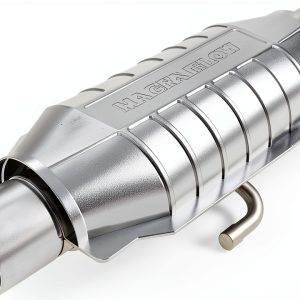 MagnaFlow Universal Catalytic Converter 94016 Stainless Steel
  Rocky Nook Cinematography eBook Digital Photography Guide
  The Society of Secrets Romantic Suspense Kindle eBook
 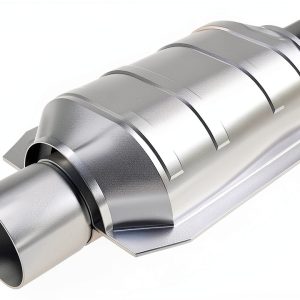 MagnaFlow Catalytic Converter 334105 CARB Stainless Steel 13in
 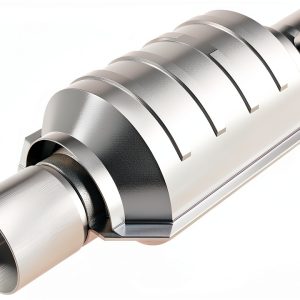 MagnaFlow Catalytic Converter 53134 Standard Grade Universal Fit EPA
 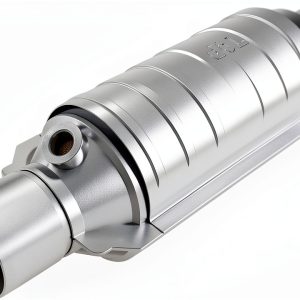 MagnaFlow Catalytic Converter California Grade Stainless Steel 418034
  Digital Photography Reference Kindle Book English Edition
  Liability Insurance Kindle Book Business Coverage Guide
  Frances Lincoln Street Photography Kindle Book Digital
  Walker Exhaust 53425 Catalytic Converter for 2001-2003 Ford Ranger
  Explicit Young Woman Erotic Photography Book Series
  iUniverse Business Insurance Kindle Book English Edition
  Dorman Exhaust Manifold 674-715 Steel Mechanics
  Rocky Nook Photography Lighting Book Kindle Edition 645
  Avon a Holiday Romance Book Kindle English 320 Pages
  Cable Hole Cover 1-3/8" (35mm) Zinc Alloy Desk Grommet Bright Silver